Heat Balance Analysis
First law thermodynamics — with detailed combustion modeling for gas turbines and fossil-fueled boilers — applied to every equipment icon and flow stream in the plant model.
Get MapExDVR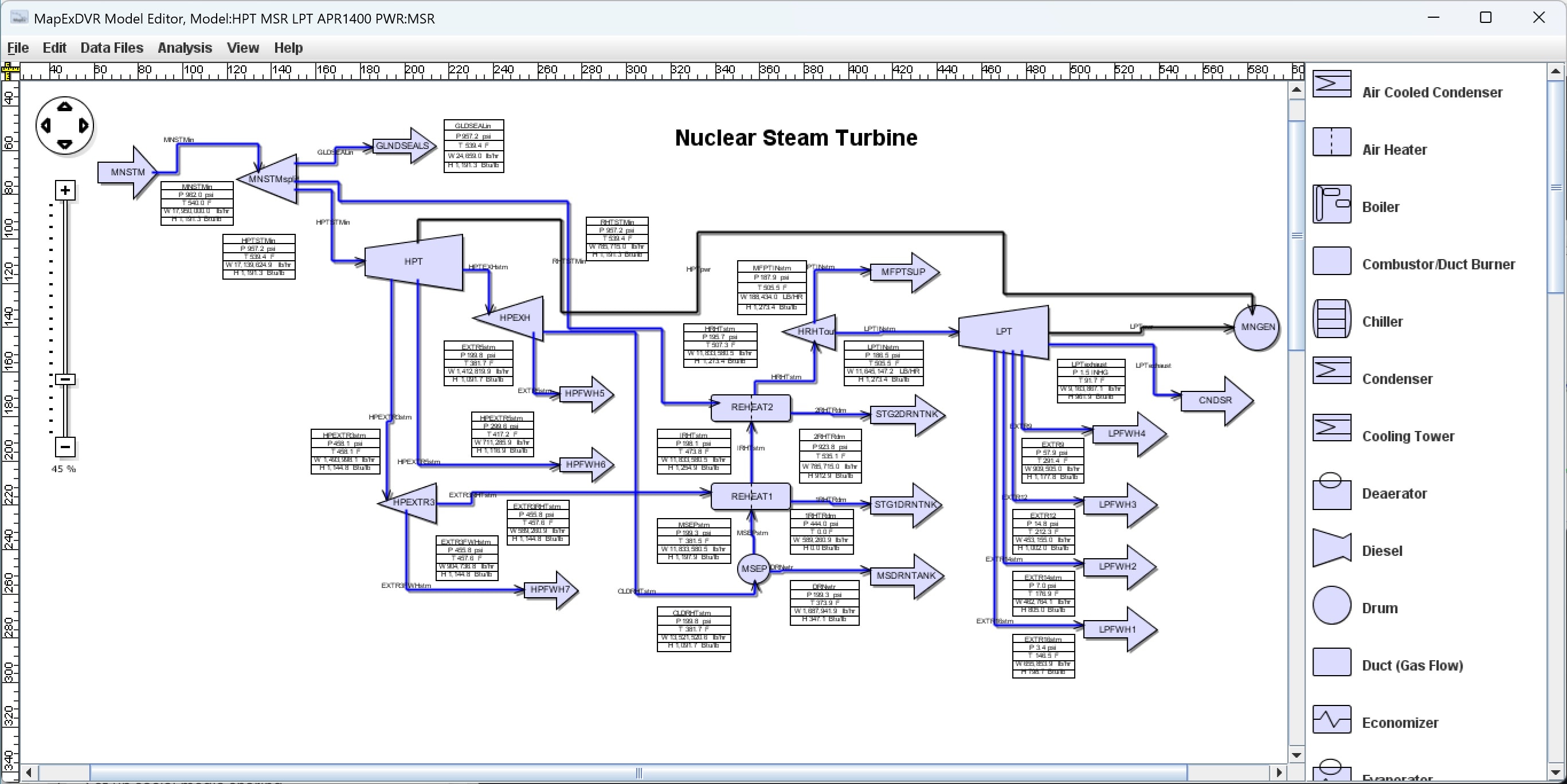
A Complete Thermodynamic Picture
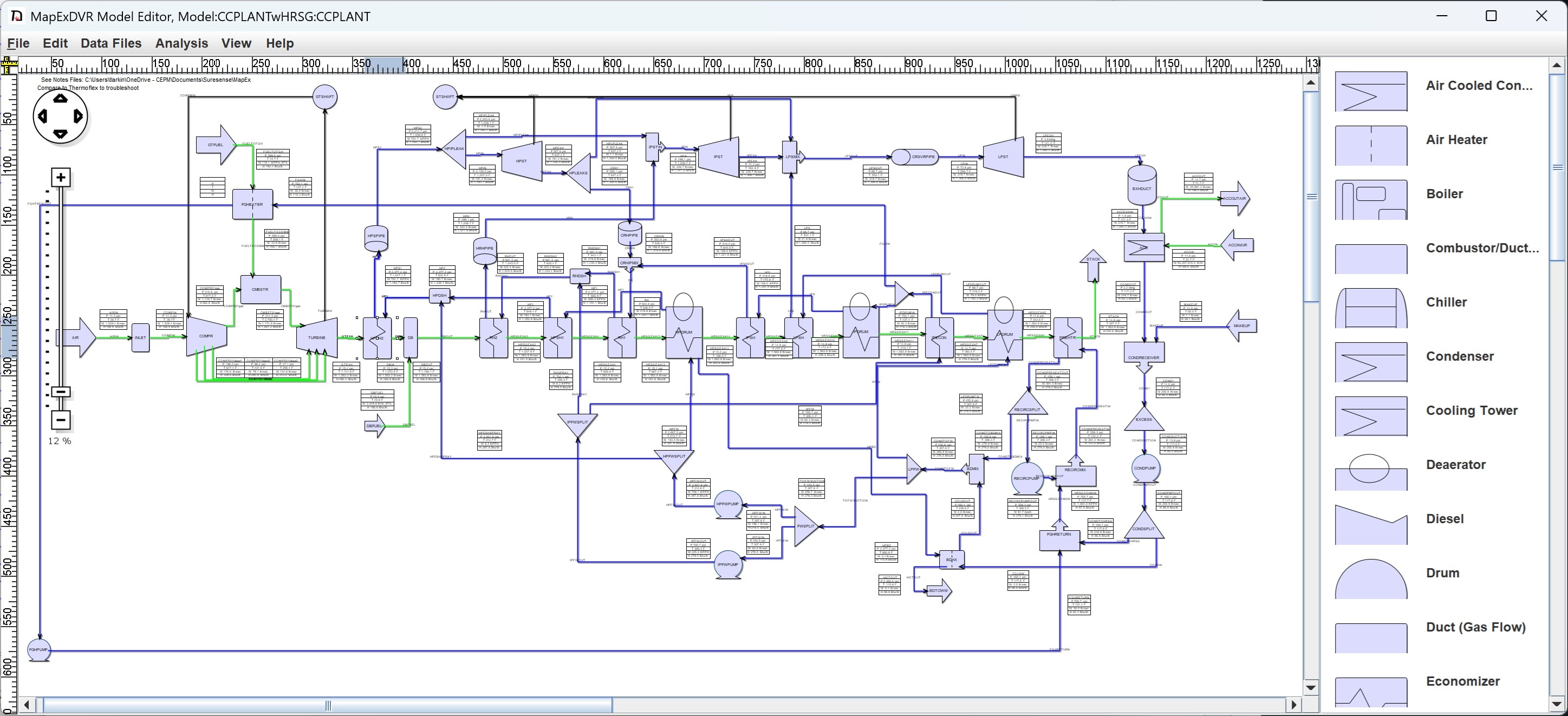
MapExDVR models every component in the plant thermodynamic cycle — turbines, heat exchangers, pumps, compressors, condensers, chillers, boilers, and combustion systems. By applying the laws of conservation of mass and energy, it calculates all temperatures, pressures, flows, and enthalpies throughout the system, including at locations where no physical sensor exists. These calculated values are sometimes called virtual sensors and are more accurate than the individual sensor values becasue the reconciled data is based on the input from many redundant sensors.
First Law of Thermodynamics
The heat balance applies mass and energy conservation equations simultaneously across every component in the cycle. The result is a fully consistent set of thermodynamic states at every node in the system — reconciled to satisfy the governing equations even when measured data contains gaps or errors.
Detailed Combustion Modeling
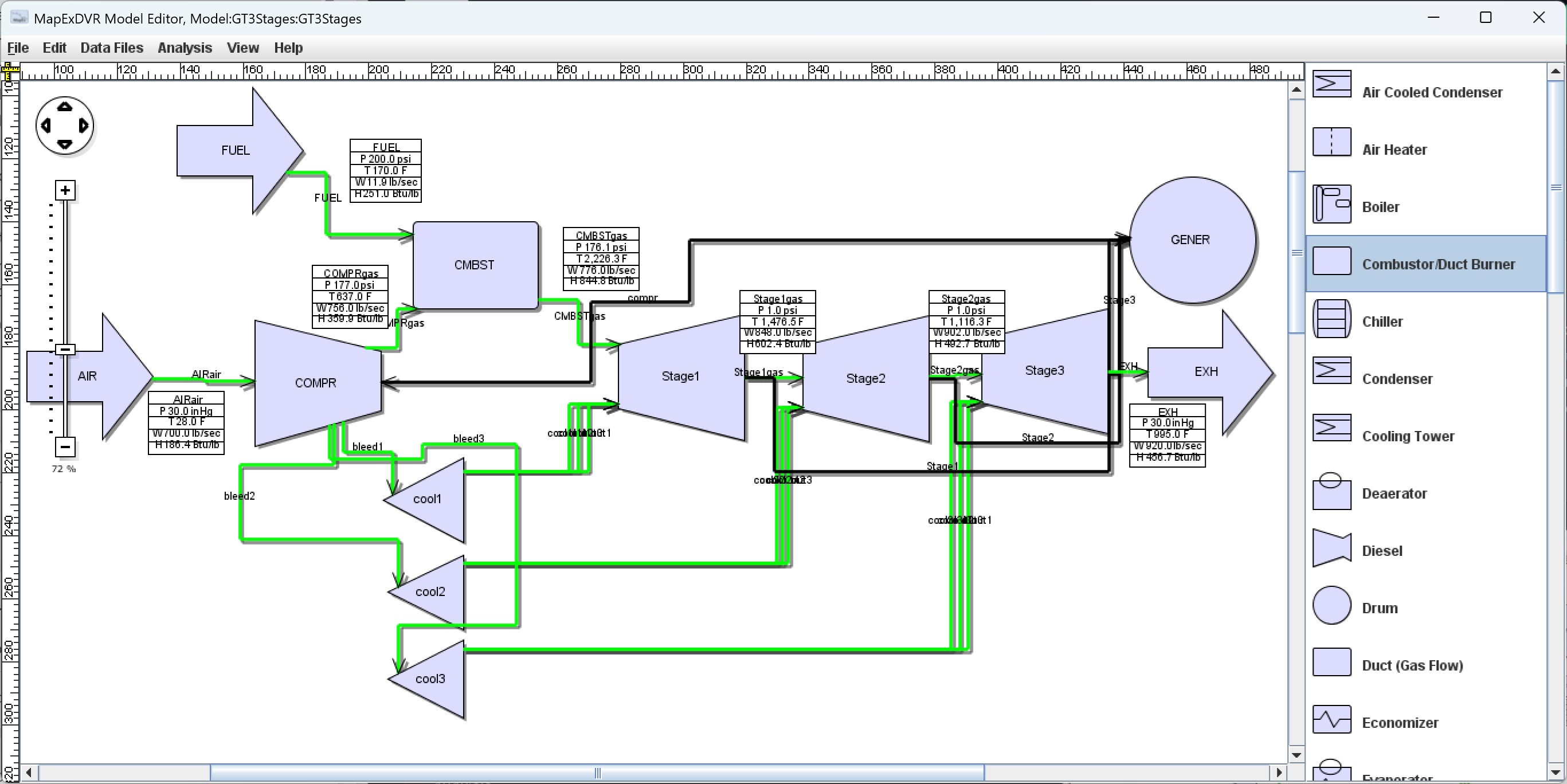
MapExDVR includes detailed combustion modeling used for both gas turbine and fossil-fueled boiler analysis. The combustion analysis calculates the mass fractions of all the individual gases in the flow stream, it does not simplify the flue gas to a mixture of dry air and water as many boiler analyic systems assume. The result is a rigorous representation of combustion chemistry that is applicatble to all fuel types and processes.
Gas Turbine Heat Balance Analysis
For gas turbine plants, the combustion model calculates turbine inlet conditions and exhaust gas properties from fuel chemistry. This enables precise determination of the first stage turbine nozzle flow area, the firing temperature, blade metal temperature and exhaust gas composition and flow rate — quantities that are critical inputs for turbine performance and equipment health evaluation.
Combined Cycle Model